Frequently Asked Questions
The most-asked questions about national parks of the world.
What exactly are national parks?
National parks are large stretches of land or sea designated by a government to preserve natural landscapes, ecosystems, and cultural heritage while still welcoming the public for recreation and education. They sit in a middle ground between fully restricted nature reserves and open public lands, balancing conservation with accessible enjoyment.
Who is the central figure most associated with the national-park movement?
American naturalist John Muir is widely regarded as the movement's spiritual father; his passionate writings and lobbying in the 1890s helped push Yosemite and the Sierra Nevada into federal protection. His philosophy that wild places hold intrinsic value beyond their economic use became the intellectual backbone of park advocacy worldwide.
Where should a newcomer begin exploring the world's national parks?
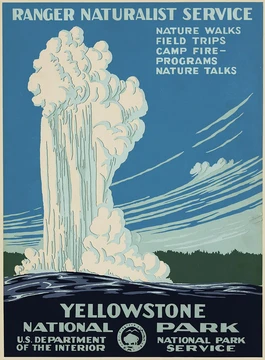
Yellowstone in the United States is the natural starting point, as it was the first park of its kind and offers geysers, grizzlies, and sweeping canyon scenery all in one location. From there, fans often branch out to Serengeti, Torres del Paine, or the Great Barrier Reef to appreciate the full spectrum of ecosystems the global network covers.
Roughly how many national parks exist around the globe?
More than 15,000 parks are spread across approximately 120 countries, though each nation defines and designates them differently. Collectively they cover hundreds of millions of hectares of terrestrial and marine territory.
Which countries are most often cited for having the largest numbers of national parks?
The United States (63 parks in the NPS system), Brazil, and Australia are frequently mentioned as having the highest counts of formally designated national parks. The exact ranking shifts depending on whether a country counts marine parks, state-level reserves, or only federal designations.
What is the oldest national park in the world?
Yellowstone, set aside by a U.S. presidential proclamation on March 1, 1872, holds the title of the world's first national park. It was created specifically to shield its geothermal features and abundant wildlife from commercial mining and unregulated hunting.
What role does the IUCN classification play in defining a national park?
The International Union for Conservation of Nature sorts protected areas into six categories, and Category II is the formal designation for a national park. This shared taxonomy lets governments, researchers, and travelers compare parks across borders using a common framework.
Are national parks free to enter?
Entry fees range from zero in many smaller or less tourist-heavy nations to substantial gate charges in heavily visited parks like Yellowstone or Kruger. Most systems also offer annual passes, resident discounts, or free entry for children and seniors.
What are a few landmark moments in the history of national parks?
The 1916 U.S. National Park Service Act created the first dedicated federal agency to manage parks professionally, a model later imitated by other nations. The 1972 UNESCO World Heritage Convention and the 1992 Rio Earth Summit further wove park protection into international law and climate policy.
How does a national park differ from a nature reserve or a state forest?
The key distinction is the level of public access and recreation permitted: national parks actively invite tourism, hiking, and interpretation, while nature reserves often limit or prohibit entry to shield fragile habitats. State or national forests, by contrast, are managed more for sustainable resource use such as logging or grazing.